
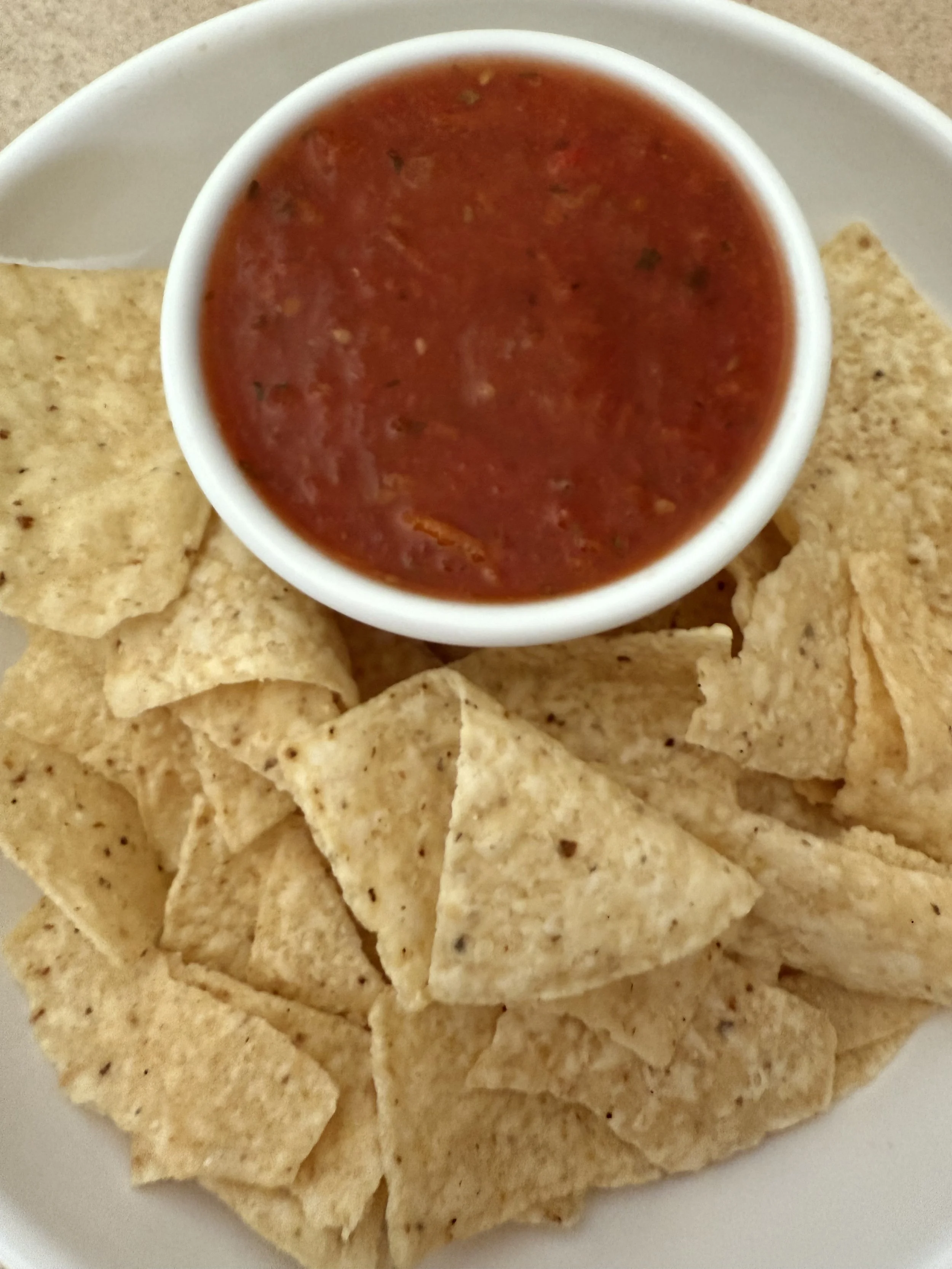
Salsa: An EasyWay to Fight Food Waste
This easy salsa recipe is a delicious way to use up produce before it goes bad. Fresh, fast, and waste free!
If you read my recent Instagram post about food waste, you know how important it is to reduce what ends up in the trash. Especially when it comes to produce. One of the easiest, most delicious ways to rescue tomatoes, wrinkled jalapeños, or half-used onions is… SALSA.
I don’t usually use cherry tomatoes when I make salsa but I have with sauce so it’s basically a variation of that, with a slightly different flavor profile. I usually make soup or some kind of hash when I have odds and ends in the fridge that are still perfectly good but need to be used soon. This salsa is bright, flavorful, and totally customizable based on what you have. Even the stems of herbs or the juice from a citrus wedge can find a home in this mix! Ready to rescue your produce and make something amazing? Keep scrolling for the full recipe! And if you try it, tag me I’d love to see your creative, zero waste salsa twist.
Salsa
Ingredients:
5-6 cups of cherry tomoatoes1 large onion3 jalapeños1 bunch of cilantroSaltPepper
2-3 limes
Directions:
Put the tomatoes in a large pot add 1/4 cup of water and heat on high for 2-3 minutes.
Chop the onions and chop and seed the jalapeños, I removed the seeds from 2 of them, I didn’t want it too spicy.
Add the onions, peppers, salt and pepper to the tomoatoes.
Simmer for 10-15 minutes, turn off the heat and add the chopped cilantro and cover the pot with a lid.
Let the salsa cool completely, add the lime juice.
Taste and adjust the salt and pepper.
Transfer to the blender and blend to your desired consistency, you can use an immersion blender if you have one. Pour into a large glass mason jar and store in the refrigerator. It will stay fresh for 3-4 weeks but you’ll probably eat it before then. Enjoy!
Overripe tomatoes? Perfect—they’re sweeter and juicier.
Last bits of onion, garlic, or peppers? Into the pot they go.
Cilantro stems? Chop them up! They’re full of flavor and reduce waste.
This is more than salsa, it’s a strategy. A way to turn what you already have into something fresh and intentional.
Serving Ideas:
Pair with tortilla chips for a quick snack.
Spoon over rice, roasted veggies, or your favorite plant-based protein.
Add to avocado toast or baked potatoes for a flavor boost.

The Importance of Gardening in 2023 and Aeroponic Innovations
Hey there, fellow garden enthusiasts! Today, I want to share my thoughts on the significance of gardening in 2023, and why I believe it's an absolute must! With climate change becoming an increasingly urgent issue, it is more important than ever to find ways to reduce our impact on the environment . Gardening provides not only a powerful solution, but a doable one. It grants us access to fresh, wholesome food and also carries a host of environmental benefits. Whether it’s a backyard garden, community garden or aeroponic garden, they all reduce the need for transportation and packaging of store-bought produce and can reduce or eliminate the need for harmful pesticides and fertilizers. I'm passionate about sustainability, nurturing connections, and making a positive impact on the world.
Gardening has been so therapeutic for me. Studies show that spending time in nature can reduce stress, anxiety, and depression, and improve overall well-being. Gardening is a great way to get outside, get your hands dirty, and play in the dirt. The years that I’ve had “bumper crops” and had to give away broccolini, zucchini, tomatoes & cucumbers were so satisfying and gave me a chance to know my neighbors. The year I started making pickles it was because, I literally had 2-3 new cucumbers every morning (if my dog Sadie didn’t get to them first!). The benefits of gardening extend far beyond environmental concerns. As social beings, we thrive on meaningful connections and the well-being of others wellness.
Gardening can also lead to substantial cost savings. Growing our own food can be a budget-friendly alternative, particularly if fresh produce is expensive or scarce in our vicinities. Community gardens in food deserts might be the only way families can afford fresh, in season produce. Community gardens, in particular, serve as nurturing spaces for people to cultivate their own food while forging connections with like-minded individuals. Gardening offers a wonderful opportunity to build vibrant communities and foster a sense of togetherness.
The first garden I ever planted I was VERY pregnant with my son, I planted all kinds of vegetables, plus we had a plum tree, an apricot tree and a lemon tree. Gardening is a good way to get little ones to try foods they may not normally try. Planting the seeds, smoothing out the soil, watering and checking their growth every day is a fun and interactive way to teach little kids where their food comes from, the importance of sustainability and encourage them to try what they’ve grown.
Lastly, let's not forget the sheer beauty that gardening brings into our lives. Whether it's a windowsill herb garden, a blossoming balcony, or a flourishing backyard oasis, plants and flowers add color, texture, and fragrances that uplift our spirits. Right now I don’t have a yard so I’ve opted for an aeroponic garden, I go out every morning and tell my plants how beautiful they are and how much I appreciate them. My tower is on my front porch, I love the aesthetics and seeing the growth day to day brings me and my neighbors so much joy. Passersby ask what I’m growing and I look forward to being able to share my produce with them. There’s more than one way to have a community garden. In urban areas there are literally farms of vertical/aeroponic gardens. Tower Garden
Gardening holds immense importance in 2023 and beyond. It encompasses so many benefits….from sustainability, community building, mental and physical well-being. So, friends, let's embrace gardening as a transformative journey of connection, nurturing, and positive change for ourselves, our communities and the environment.

Plant-based diets and your carbon footprint
One of the most significant environmental benefits of a plant-based diet is its potential to reduce greenhouse gas emissions
There are a lot of compelling reasons to consider a plant-based diet for environmental reasons. As concerns about the environment continue to grow, many people are turning to plant-based diets as a way to reduce their carbon footprint, that’s what prompted me to go plant-based, this time around. The first time I went vegetarian I was 15 and it was more for health reasons. A plant-based diet is typically made up of fruits, vegetables, whole grains, legumes, nuts, and seeds, while minimizing (or avoiding altogether) animal products like meat, dairy, and eggs. Here, I’ll give you some of the key reasons why you might want to consider eating a plant-based diet to help combat climate change.
Reducing greenhouse gas emissions
One of the most significant environmental benefits of a plant-based diet is its potential to reduce greenhouse gas emissions. Animal agriculture is a major contributor, with an estimated 14.5% of global emissions. Livestock farming is responsible for significant amounts of methane, nitrous oxide, and carbon dioxide emissions, all of which contribute to climate change. By reducing or eliminating animal products from your diet, you can help to reduce your carbon footprint and lower your impact on the planet.
Conserving water resources
Another important environmental benefit of a plant-based diet is its potential to conserve water resources. Animal agriculture is a highly water-intensive industry, a pound of beef takes approximately 2,500 gallons of water to produce. In comparison, a pound of vegetables typically requires much less water. Choosing plant-based foods can help to conserve water resources and reduce the strain on water supplies in drought-prone regions.
Protecting biodiversity
The production of animal products often involves deforestation, which can lead to the loss of biodiversity and habitat destruction. Large areas of forests are cleared to make way for grazing land and to grow crops to feed livestock, which can lead to the displacement of indigenous people, the loss of wildlife, and the destruction of ecosystems. Eating plant-based, you help reduce the demand for animal products and support sustainable farming practices that protect biodiversity and promote environmental conservation.
Reducing pollution
Livestock farming produces large amounts of manure, which can contaminate waterways and contribute to algal blooms and other forms of water pollution. The use of fertilizers and pesticides in animal feed production also contribute to air and water pollution.
By reducing greenhouse gas emissions, conserving water resources, protecting biodiversity, and reducing pollution, a plant-based diet can help to reduce your impact on the planet and promote a more sustainable food system. Whether you're looking to reduce your consumption of animal products, already a vegetarian or vegan, wanting to incorporate more plant-based foods into your diet is a powerful way to make a positive difference for the environment.
Making changes can be overwhelming. Even small changes have a big impact. Start with meatless Mondays and shopping at your local farmers market for a few things once a week, or even once a month. Think of this as an adventure and be open to experimenting in the kitchen. A lot of people think that a plant based diet is going to be bland or tasteless, they don’t have to be. The recipes I share here are plant based, and there a tons of others online. Food is a huge way to connect with people and celebrate life, reducing your impact on the environment doesn’t mean you have to reduce your joy!

Some holiday tips to reduce waste
You might have heard “glittt for wrapping, use unexpected things like paper bags, news paper, cloth scraps, magazine pages. Bulk food, grocery bags or pillow cases work they and serve a dual purpose. Bows made from fabric or twine. Pine cones, cinnamon sticks, dried citrus fruit are all cute and compostable. Or you can use stuff that’s been in your Christmas box for years like I am.

If you’re trying to reduce your waste, holiday shopping can be a challenge. You don’t want to buy someone one more thing they absolutely don’t need but you still want to get them something. And then there’s the wrapping and cards Oy vey! Every year about 540,000 tons of wrapping paper is thrown out and ends up in landfills. So. Much. Waste.
I’ll share with you a few things I’ve done this past year. For Valentine’s Day I sent my kid’s Chipotle gift cards, but instead of mailing them a card with a gift card in it, I sent them e-gift cards with a note saying I love you, here’s lunch on me. Most sites that offer e-gift cards have a place for a personal message. For our anniversary instead of gifts we went out for breakfast and went whale watching. We’d never been and it was a beautiful day out on the water. Of course there’s good old cash, I forgot to get (or make) my niece a graduation card so I used Zelle through my bank and transferred her gift right there at the dinner table. Easy peasy.
Our daily choices can make a huge impact, it may not feel like much but trust me it matters. Here are some other ideas:
Support small businesses, there’s lots of cool hand made things at the local farmers markets and usually they don’t have packaging. Think soaps, lip balms, bath bombs etc. Buying things at local businesses cuts down on transportation pollution.
Get your coffee or tea loving friend or family member a reusable coffee cup and an e gift card to their favorite coffee place (preferably a small business).
Give the gift of quality time, especially to your aging grandparents and parents. Take them for lunch, dinner, a movie, a pedicure. Go to a concert, bake cookies, watch a football game. Whatever it is actually doesn’t matter much, they just want your time. They get lonely and need to know that they’re still important amidst our busy lives.
Shop secondhand. I have found some incredible deals at thrift stores, like $200+ premium denim jeans for $15!!! And I LOVE Poshmark, I have found amazing things with the tags still on for less than half of the retail price..
As for wrapping, use unexpected things like old paper shopping bags, news paper, cloth scraps, magazine pages. Bulk food, grocery bags or pillow cases work they and serve a dual purpose. Bows made from fabric or twine. Pine cones, cinnamon sticks, dried citrus fruit are all cute and compostable. Or you can use stuff that’s been in your Christmas box for years like I am.
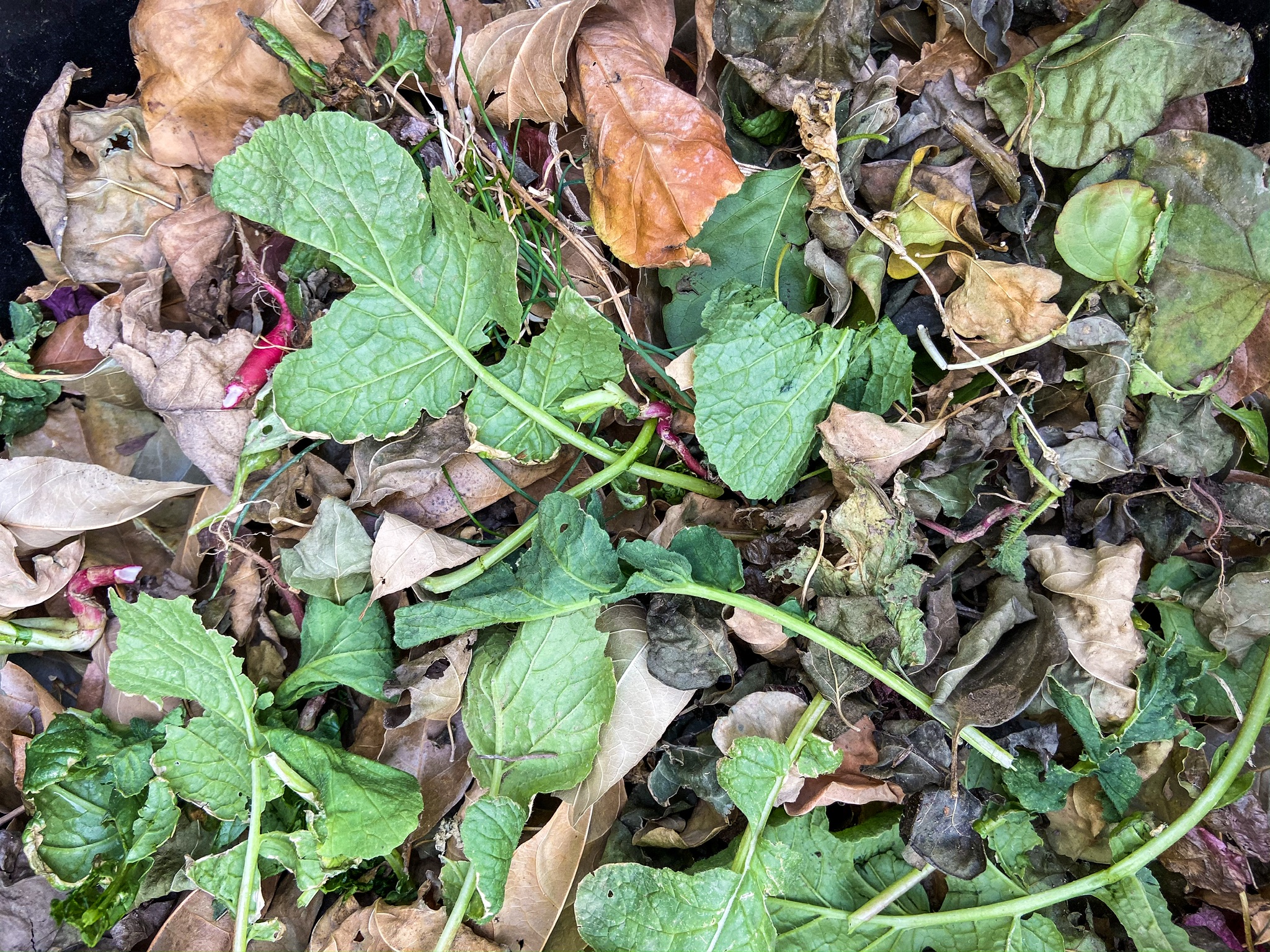
Composting is good for your garden and for climate change
This is a picture of my compost bin, after putting a bunch and brown matter on top and before adding water. It’s normally disgusting looking! I started composting spring of 2018, and I had no idea what I was doing, I kind of still don’t.
I just started throwing all of my produce scraps in a trash can and went from there. I know last year I didn’t add nearly enough brown matter but it still did it’s magic. After a year of composting I added it to my soil and it turned into super soil, my garden went crazy this year. As you can see from previous pictures and zucchini and cucumber recipes. Somehow I ended up with black soldier fly larvae, which according to the internet is one of the best things you could possibly have in your compost bin, again disgusting.
Composting is actually a very important part of combating climate change. Here’s a video done by our daughter about how composting is a part of the solution. Composting can not only remove existing greenhouse gases from our atmosphere, but stop the production of methane, a GHG that is 36x more potent than carbon dioxide!
(Fun fact: Sage was filming this video when I showed up in Berkeley to surprise her for her 21st birthday)

How the world’s recycling system broke
For decades, we've been told that recycling is one of the best things we can do for the planet. We dutifully rinse our containers, sort our plastics, and feel good about doing our part. But here's an uncomfortable truth: the recycling system isn't working the way most of us think it is and in 2018, much of it came to a screeching halt.
This isn't meant to discourage you. It's meant to empower you with knowledge so you can make choices that actually make a difference.
What Happened in 2018: China's National Sword Policy
For years, the United States and other Western countries shipped their recyclable materials to China for processing. We're talking about millions of tons of plastic, paper, and other materials crossing the ocean to be sorted and recycled. Then, in January 2018, China implemented their "National Sword" policy, effectively banning the import of most recyclables. Why? Because much of what we were sending wasn't actually recyclable and it was contaminated with food waste, non-recyclable materials mixed in, and plastics that couldn't be processed.
The immediate impact:
Recycling facilities in the US had nowhere to send materials
Many municipalities stopped accepting certain types of recyclables
Millions of tons of "recyclables" ended up in landfills
The economics of recycling collapsed overnight
The system we relied on for decades was suddenly broken.
The Uncomfortable Truth About Plastic is that most of it can’t actually be recycled.
Of the seven types of plastic (marked with numbers 1-7), only #1 (PET) and #2 (HDPE) are regularly recycled—and even then, only a small percentage actually gets recycled.
The numbers:
Less than 9% of all plastic ever produced has been recycled
About 12% has been incinerated
The rest (79%) is in landfills or the environment
Plastic Degrades Each Time It's Recycled
Unlike glass or metal, plastic can't be infinitely recycled. Each time it's processed, the quality degrades. A plastic bottle might become a lower-grade product once, but then it's done.
"Recycling" Often Means Something Else
Much of what gets "recycled" is actually:
Downcycled - turned into lower-quality products that can't be recycled again
Incinerated - burned for energy (releasing greenhouse gases)
Exported - sent to countries with less environmental regulation
Landfilled - when contamination is too high or markets don't exist
The recycling crisis isn't your fault. The system was flawed from the start:
1. Industry Shifted Responsibility
In the 1970s, beverage and packaging companies facing criticism for waste created the "Keep America Beautiful" campaign. The message? Litter is YOUR problem, not ours. This clever marketing shifted responsibility from manufacturers to consumers.
2. Wishful Recycling
We've been encouraged to "when in doubt, recycle it"—but contamination ruins entire batches of recyclables. That pizza box with grease? That plastic bag? They contaminate everything they touch.
3. Economic Dependency
Recycling only works when there's a market for recycled materials. When virgin plastic became cheaper than recycled plastic (thanks to fracking and oil subsidies), the economics collapsed.
4. Lack of Infrastructure
The US never built adequate domestic recycling infrastructure because we relied on shipping materials overseas. When that stopped, we had no backup plan.
This isn't about guilt or giving up. It's about understanding what actually helps so you can focus your energy where it matters most.
The Hierarchy of What Works (In Order of Impact):
1. REFUSE Don't accept what you don't need.
Say no to single-use plastics
Decline freebies and promotional items
Refuse excessive packaging
2. REDUCE Use less of everything.
Buy only what you need
Choose quality over quantity
Opt for products with minimal packaging
3. REUSE Extend the life of what you have.
Use reusable bags, bottles, containers
Repair instead of replace
Buy secondhand when possible
4. RECYCLE Only after the above three.
Focus on materials that actually get recycled (aluminum, steel, cardboard)
Keep it clean and uncontaminated
Know your local recycling rules
5. ROT Compost organic waste.
Food scraps belong in compost, not landfills
Reduces methane emissions
Creates valuable soil
High-Impact Actions:
Based on current research and infrastructure, here's what you can do that truly helps:
Aluminum & Steel Cans
These ACTUALLY get recycled at high rates (around 50-70%)
Infinitely recyclable without quality loss
Economically valuable - there's always a market
What to do: Rinse and recycle all aluminum and steel
Cardboard & Paper
High recycling rates when clean and dry
Can be recycled 5-7 times before fibers break down
What to do: Keep dry, remove tape/labels when possible, flatten boxes
Glass
Infinitely recyclable
Some municipalities struggle with economics/weight
What to do: Check if your area accepts glass; if not, some stores take it back
Reduce Plastic at the Source This is the MOST important thing you can do:
Bring reusable bags, bottles, cups, containers
Choose products in glass, metal, or cardboard instead of plastic
Buy in bulk when possible
Support legislation requiring manufacturers to reduce packaging
Your Action Plan: Small Steps That Matter
This Week:
Don't try to do everything at once. Pick one or two changes to start:Learn your local recycling rules (they vary widely!)
Start carrying a reusable bag
Buy one reusable item (water bottle, coffee cup, shopping bag)
This Month:
Audit your trash - what could you refuse or reduce?
Switch one regularly purchased item to less packaging
Start composting (even just coffee grounds and produce scraps)
This Year:
Build a collection of reusable items for daily life
Support businesses and brands reducing packaging
Talk to others about what you've learned
Individual actions are important, but we also need systemic change:
Support Policies That Work:
Extended Producer Responsibility (EPR) - Making manufacturers responsible for end-of-life of products
Deposit return systems - Financial incentive to return containers
Bans on problematic single-use plastics
Investment in domestic recycling infrastructure
Hold Companies Accountable:
Choose companies committed to reducing packaging
Avoid brands using excessive plastic
Support businesses with take-back programs
Hope Amid the Broken System
Share what you've learned. The more people understand the reality of recycling, the more pressure there is for real solutions. Learning that recycling doesn't work as promised can feel defeating. I get it. But here's the hopeful part: now that you know, you can focus on actions that genuinely help.
Every piece of plastic you refuse is one less that needs to be "dealt with." Every reusable item you choose prevents waste from being created in the first place. Every conversation you have spreads awareness that can lead to better policies.
The solution isn't better recycling; it's less waste. And that's something each of us can work on, one decision/one bite at a time.
Learn More
My daughter Sage continues to educate people about sustainability and zero waste. Follow her on Instagram at @sagelenier for evidence-based information about what actually works for the planet.
For more information about recycling and what you can do:
Your local recycling facility - Find out exactly what they accept
EPA's Recycling Resource - epa.gov/recycle
The Story of Stuff - Documentary about consumption and waste
Your city's waste management department - Many offer free educational programs
Real Solutions
We've been fed a comfortable narrative about recycling that let us feel good without questioning the system. Now we know better. The recycling system broke not because we weren't trying hard enough, but because it was fundamentally flawed. Knowing the truth gives us power. Power to make different choices. Power to demand better systems. Power to focus on what actually works.
Refuse what you don't need. Reduce what you use. Reuse what you have. And recycle what's left smartly, understanding its limitations.
That's how we move forward. Not with false hope, but with real action.
One decision, one step, one bite at a time.
“Recycling is commonly conceived of as 'good for the planet'. What most people don't know is that it actually isn't, and that most of the recycling industry grinded to a halt in 2018. With the shape our planet is in, there's no time to waste on false solutions, so it's imperative that we understand the actions we can take that will truly benefit the earth.” Sage Lenier

Why Organic?
Some people think that buying organic produce and products is hype, I am not one of them. I buy organic whenever possible, not only does it taste better, it’s better for the environment and most of the time it is affordable. The difference is usually only $.20 -.50/ lb or bunch, that is not expensive.
Every year the Environmental Working Group (EWG) publishes an updated list of the 12 most contaminated foods, here’s this years list:
The 2019 Dirty Dozen:
Strawberries
Spinach
Kale
Nectarines
Apples
Grapes
Peaches
Cherries
Pears
Tomatoes
Celery
Potatoes
(Strawberries rank number one for the fourth year in a row, and the rest of the list looks similar to years past with one exception: Kale made the top 12 for the first time in a decade.)
If you're concerned about pesticides, the EWG also publishes a list of the "Clean 15," a.k.a. the produce from conventional growers that generally had less residue in the group's tests.
The 2019 Clean 15:
Avocados
Sweet corn
Pineapples
Frozen sweet peas
Onions
Papayas
Eggplants
Asparagus
Kiwis
Cabbages
Cauliflower
Cantaloupes
Broccoli
Mushrooms
Honeydew melons
If you’re juicing I think it’s extremely important to use organic produce because you do not want a concentration of pesticides and chemicals in your juice, I’d say that pretty much defeats the purpose. I’m a big believer in farmers markets, I try to go at least once a week. When my kids were tiny we loved going to the Redland’s farmers market then hit Trader Joe’s on the way home (because it was the closest one, thank God we have closer ones now)! Check out your local farmers markets, it’s super easy…..there are free app locators, just search the App Store.
Sources: www.ewg.org, www.organic.org

Zero waste, imperfectly is still moving towards zero waste
I’ve had this site now for over a year and yet I have posted only a handful of times. The biggest reason for that is that I’ve been somewhat intimidated, mostly in regard to the zero waste category. It doesn’t matter that I’m not doing zero waste 100% perfectly. I follow Anne-Marie Bonneau on Instagram, her profile name is zerowastechef, she posted “we don’t need a handful of people doing zero waste perfectly…we need millions of people doing zero waste imperfectly”. Which is the absolute truth.
Overwhelmed? No biggie, start with reusable grocery bags, produce/bulk bags, some jars and a reusable water bottle. Try looking at thrift stores for mason jars instead of buying some. I got my most recent glass water bottle at a thrift store for only $3.00.
Having meatless meals is another way to lower your carbon footprint. Too difficult? Try just one a week, need some ideas, search for #meatlessmondays. Small sustainable changes are the key, we can all do zero waste, imperfectly.

What is actually recycleable?
Recycling can be very confusing and somewhat frustrating. According to the UC Berkeley Office of Sustainability the following is what’s actually recycleable.
Recycling must be CLEAN and DRY.
⁃ If bottles and cans have food or liquid in them, they will be thrown away at the recycling plant. Moreover, if a bag of recycling is more than 20% contaminated, either with food or non-recyclables, ALL OF IT will be landfilled.
⁃ If paper is wet or damp (or gets wet or damp because of wet bottles and cans) it will go to landfill.
What is recyclable?
⁃ Clean, dry aluminum foil (feel free to wash and dry it if it has food on it)
⁃ Aluminum cans
⁃ Plastic drink bottles/milk jugs, some plastic containers but not most
⁃ Glass
⁃ Clean, dry paper & cardboard (egg cartons too!)
What isn’t recyclable?
⁃ Film plastic (plastic bags or anything like that); they clog the machines at the plant
⁃ Coffee cups/boba cups/Solo cups
⁃ Anything contaminated with food
⁃ Any mixed material. For example, orange juice cartons are plastic layered with paper. They cannot be separated, and therefore can’t be recycled.
If you don’t sort properly, or if a few people don’t sort properly and contaminate our bin, all of our efforts to cycle resources will be wasted. So it is very important that this is followed.
Also, I encourage you all to avoid packaging whenever possible. You can buy reusable mesh bags to put produce in instead of using plastic bags. The Strauss milk company sells milk in glass ($3) that you can return to the store and they give you $2 back when you return the bottle for reuse. These are two examples, but the best trash, and the best recycling, is the trash that was never created in the first place.

What is zero waste?
Miriam Webster defines zero waste as:
generating little or no waste
zero waste
noun
The creative waste management strategy of "zero waste" is a combination of community and industrial responsibility that includes deconstruction in spite of demolition, composting to keep odorous organic waste out of landfills, recycling, and a screening facility to allow more separation and reuse of waste rather than incineration. —Aimee Dolloff
We were first introduced to the zero waste idea back in 2014 when I was watching a segment on Raechal Ray with Lauren Singer. Lauren writes a blog called Trash is for Tossers, she also opened a package free shop. Our daughter took off with the idea and did a bunch of research, which led her to the book Zero Waste Home by Bea Johnson, which was Lauren Singer’s inspiration.
We’ve always sort of recycled, at least the obvious stuff. I haven’t reused as much as I could because when I was a kid my nana’s house was cluttered (think hoarders!) with different food containers she’d cleaned and saved and it drove me nuts.
What we’ve come to learn is not as many things are recyclable as you’d think, including the packages that have the symbol on them. That is mostly to tell you which kind of plastic it is....very confusing.
As a household that eats plant based, it’s a little more difficult to go completely package free. For example I can’t buy vegan cheese at the deli and put it in my own container (a least not yet!) but for me that’s a trade off I’m willing to make. We have vastly reduced our trash, we compost and have a garden so at least in my mind we’re doing pretty well.
Now what does all this have to do with you? And what are small steps you can take?
We’ve all heard “reduce, recycle, reuse” well it’s actually now “refuse, reduce, reuse”. You’ve probably heard about the ban on plastic straws, even before that actually goes into effect, you can simply say you don’t need straws at a restaurant. You can bring your reusable coffe cup for your morning java, a lot of places will give you a small discount for it. In California we’re charged 10 cents for a bag at the grocery store so most of us bring our own, well what about the produce and bulk bags? Some stores sell packs of reusable bags, or they are available online.
I know it’s a lot! But one thing, one step, one bite at a time. Chunk things down to something that’s manageable for you.